
Living in Summerlin Nevada: Complete 2025 Guide to Homes, Schools and Lifestyle | Your Las Vegas Connection
If you’re researching what it’s really like to live in Summerlin, Nevada—schools, lifestyle, golf, home prices, taxes, and how far it actually is from the Strip—this guide is for you.
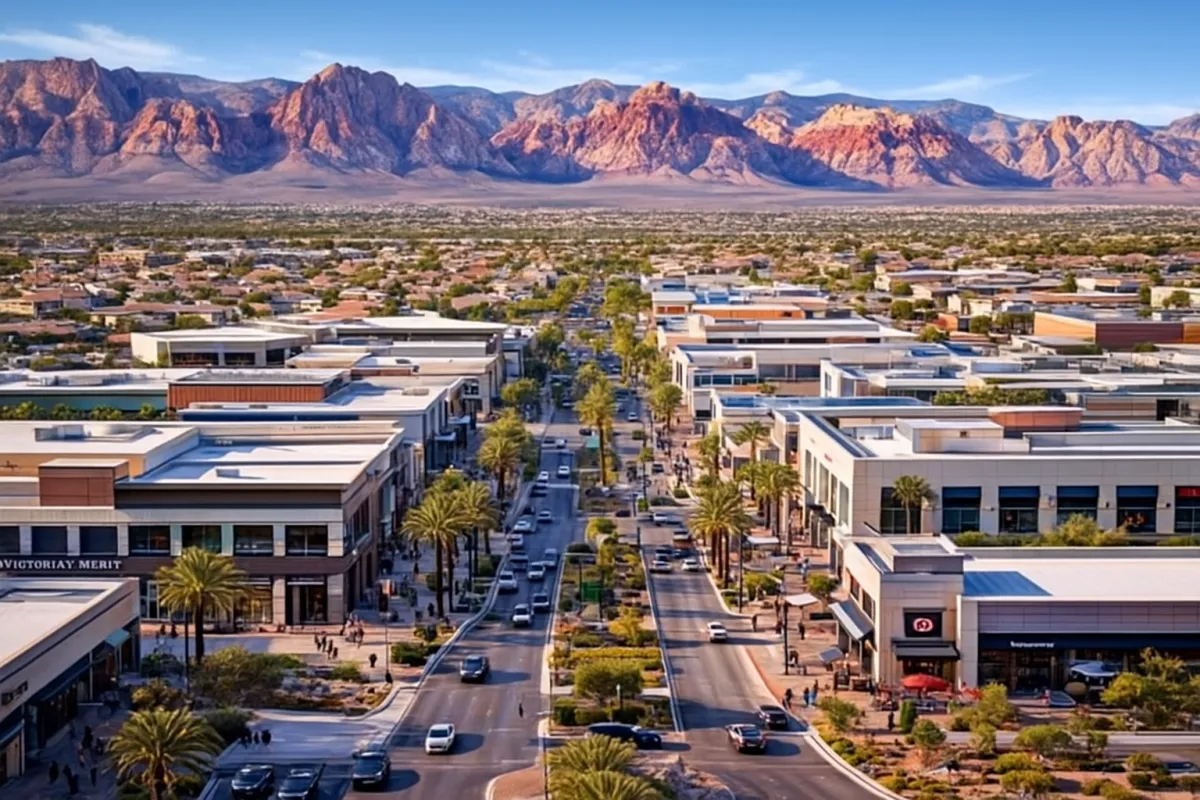
Summerlin isn’t just “a neighborhood.” It’s a 22,500-acre master-planned community on the western edge of Las Vegas, tucked against Red Rock Canyon with its own downtown, top-rated schools, golf courses, hospitals, and more than 250 parks. Over 123,000 residents now call Summerlin home, making it one of the most successful master-planned communities in the U.S.
Whether you’re a young professional, a growing family, an active retiree, or a luxury buyer shopping in the $2M–$10M+ range, Summerlin offers a very specific lifestyle: clean, safe, outdoorsy, and master-planned—yet still within easy reach of the Las Vegas Strip and the airport.
1. Where Is Summerlin, Nevada?
Summerlin sits on the far west side of the Las Vegas Valley, pushing right up against the Red Rock Canyon National Conservation Area. It’s technically within the city of Las Vegas and unincorporated Clark County, divided into areas like Summerlin North, Summerlin South, and Summerlin West.
Distance to the Strip: Roughly 10–13 miles from Downtown Summerlin to the central Las Vegas Strip (around 15–25 minutes depending on traffic).
Distance to the Airport: About 14–16 miles to Harry Reid International Airport, normally 20–30 minutes by car.
Elevation: Summerlin West especially sits at 3,500–4,400 feet, which makes it about 4–7°F cooler than lower parts of the valley.
From a GEO and SEO standpoint, people often search:
“Living in Summerlin NV vs Las Vegas”
“Best neighborhoods in Summerlin Las Vegas”
“Is Summerlin a good place to live?”
So throughout, we’ll use phrases like Summerlin NV homes, Summerlin Las Vegas lifestyle, and moving to Summerlin Nevada for search visibility.
2. A Brief History: Howard Hughes and the Birth of Summerlin
To understand Summerlin’s vibe, you have to go back to Howard Hughes.
In 1952, Hughes purchased about 25,000 acres of desert land on the valley’s west side.
The land sat largely untouched for decades.
In 1988, his company (then Summa Corporation, now The Howard Hughes Corporation) announced plans to create a massive master-planned community, naming it Summerlin after Hughes’ paternal grandmother, Jean Amelia Summerlin.
Today, Summerlin is considered a flagship Howard Hughes community, consistently ranked among top U.S. master plans for home sales and quality of life.
What that means in practical terms:
The community was master-planned from the ground up—villages, parks, schools, shopping, trails—not just pieced together randomly.
You see consistent landscaping, design standards, architectural guidelines, and HOA oversight, especially in higher-end enclaves.
The focus has always been “live, work, play” in one area, instead of building bedroom neighborhoods that rely entirely on the Strip or downtown.
3. How Summerlin Is Organized: Villages & Major Communities
Summerlin is divided into villages and now sub-districts like Summerlin North, South, and West, each with its own feel.
3.1 Major Areas of Summerlin
Summerlin North
Summerlin South
Includes The Ridges, The Mesa, The Willows, The Gardens, Ridgebrook and more.
Home to some of Las Vegas’ most prestigious guard-gated communities and golf course homes, especially in The Ridges, plus easy access to Downtown Summerlin.
Median sale price in Summerlin South around $815,000 as of October 2025, up 5.5% year-over-year.
Summerlin West
The newest frontier, stretching farther west and north toward Red Rock.
Includes areas like Redpoint, Redpoint Square, Kestrel, Kestrel Commons, Reverence, and the newer villages continuing up the hillside.
Median sold price in Summerlin West was about $718,750 (June 2025), up 8.9% year-over-year.
Elevated terrain means cooler temperatures and incredible mountain/Strip views.
3.2 Signature Communities & Villages Buyers Ask About
The Ridges (Summerlin South) – Ultra-luxury, contemporary custom and semi-custom homes, golf and canyon views, strong architectural guidelines; price points regularly $2M–$10M+.
Reverence (Summerlin West) – Guard-gated from Pulte, perched along the northern edge with clubhouse and great Strip + mountain views.
Summerlin Centre & The Cliffs/The Mesa – Close to Downtown Summerlin, newer builds, strong family appeal, parks, and access to top-rated schools.
Sun City Summerlin – A 55+ active adult community with three golf courses, clubhouses, and social clubs; median listing price around $500K as of late 2025.
From an SEO standpoint, these are powerful phrases:
“Homes for sale in Sun City Summerlin”
“Luxury homes in The Ridges Summerlin”
“New construction homes in Summerlin West”
4. Lifestyle in Summerlin: Parks, Trails, Downtown & Everyday Living
4.1 Parks, Trails & Outdoor Living
Summerlin is famous for its outdoor lifestyle.
Over 250 parks and more than 150 miles of interconnected trails encourage jogging, biking, dog-walking, and neighborhood strolls.
Easy access to Red Rock Canyon National Conservation Area for hiking, rock climbing, scenic drives, and biking.
Many parks are tucked inside neighborhoods: ball fields, playgrounds, splash pads, tennis, pickleball, and basketball.
For AEO/FAQ searches, people often ask:
“Is Summerlin walkable?”
Summerlin is walkable within each village—parks, neighborhood schools, and some retail are close—but you’ll still rely on a car for most errands. Some town centers and Downtown Summerlin are more pedestrian-friendly.
4.2 Downtown Summerlin: The Urban Core
Downtown Summerlin (DTS) is the heart of the community’s lifestyle and social scene:
Open-air shopping and dining destination with over 125 stores and restaurants, including national brands and local favorites.
Anchored by Red Rock Casino Resort & Spa and adjacent to Las Vegas Ballpark, home of the Triple-A Las Vegas Aviators.
Hosts farmers’ markets, holiday parades, fitness events, concerts, and seasonal ice skating, making it a true gathering place.
This area is where Summerlin feels like its own “mini city”—you can:
Shop at Trader Joe’s, Whole Foods, Costco nearby, high-end boutiques, and national retailers.
Dine at everything from casual eateries to upscale concepts.
Catch a ballgame, hit the movie theater, enjoy rooftop bars at Red Rock, or attend community events.
4.3 Dining, Shopping & Entertainment Beyond DTS
Within Summerlin you’ll find:
Multiple neighborhood shopping centers with grocery stores (Albertsons, Smith’s, Sprouts), gyms, nail salons, coffee shops, and casual dining.
Nearby entertainment:
Red Rock Casino – gaming, spa, pool, bowling, concerts, movies.
Local gyms and boutique fitness – Lifetime, EOS, F45, yoga, Pilates, boxing.
Family-friendly spots – arcades, trampoline parks just outside Summerlin, community pools, and sports leagues.
4.4 Walkability & Driving Reality
Summerlin was designed for cars plus pockets of walkability:
Inside each village, it’s easy to walk/jog along greenbelts and paths.
Downtown Summerlin is truly walkable; park once and shop/dine.
For daily errands like work, school, or cross-town appointments, you’ll almost certainly drive.
Keywords people search:
“Is Summerlin walkable?”
“Walkability in Summerlin NV”
“Living near Downtown Summerlin”
5. Schools in Summerlin: Public, Charter & Private
One of the biggest reasons families choose to move to Summerlin is education.
5.1 Public Schools
Summerlin is served primarily by Clark County School District (CCSD). It has several high-performing public schools, including two nationally recognized public high schools, according to Howard Hughes Corp.
Notable schools in and around Summerlin include (always verify current zoning):
Palo Verde High School – A well-known public high school serving much of Summerlin.
West Career & Technical Academy – A magnet high school with specialized programs (STEM, health, etc.) just east of Summerlin.
Multiple highly rated elementary and middle schools within the master plan.
Because CCSD zoning can change, buyers should always:
Verify the current assigned schools for a specific address via CCSD.
Look at GreatSchools ratings and state report cards.
Consider magnet and CTA options if specialized programs are important.
5.2 Charter Schools
Las Vegas has a growing charter school presence, and several are within reasonable distance of Summerlin, offering college-prep, STEM, and arts-focused options. Families often combine:
Neighborhood public school + charter waitlist
Or choose a charter for middle/high school while using nearby elementary schools.
5.3 Private Schools
Summerlin is especially attractive for private-school families. Howard Hughes Corp notes that Summerlin is home to ten nationally recognized private schools.
Notable options in or very near Summerlin include:
The Meadows School – A top college-prep school; Howard Hughes donated land for its 40-acre campus in the 1980s, making it one of the community’s earliest institutions.
Faith Lutheran Middle School & High School – A large, well-known private school in the Summerlin area with strong academics and athletics.
Additional parochial and secular private schools across the west valley, accessible within a 10–25 minute drive.
Families moving to Summerlin often prioritize:
Short commute from home → school → work
Safe neighborhood streets for kids
Access to sports clubs, music, theater, and academic enrichment
6. Cost of Living, Home Prices & Property Taxes in Summerlin
6.1 Average & Median Home Prices
As of 2025, Summerlin’s housing market is more expensive than the Las Vegas average, reflecting demand for its location, amenities, and schools.
Recent numbers:
Overall median home price in Summerlin: about $750,500 as of 2025.
Summerlin North: average home value around $634,265, with median sale price around $701K–$748K.
Summerlin South: median sale price around $815,000 (October 2025).
Summerlin West: median sold price $718,750 (June 2025) and median list price around $829.5K in fall 2025.
Sun City Summerlin (55+): median listing/sale prices roughly $460K–$500K depending on source and timeframe.
Greater Las Vegas median: around $470K–$474K for 2025, so Summerlin runs notably higher than the valley overall.
Price ranges you’ll typically see:
Condos/townhomes: roughly mid-$300Ks to $600Ks+ depending on size and location.
Single-family non-gated homes: ~$500K–$1M+.
Guard-gated/golf course communities: often $1M–$5M+, with ultra-luxury properties reaching $10M+ in areas like The Ridges.
From an SEO perspective, include phrases like:
“Average home price in Summerlin NV 2025”
“Summerlin NV real estate market”
“Homes for sale in Summerlin under $600,000”
6.2 Property Taxes
Nevada has no state income tax, which is a major draw. Property taxes are generally:
Around 0.5–0.75% of assessed value in Clark County, though effective rates vary by district, improvements, and capped annual increases.
Compared to California, Washington or the Northeast, many buyers see Summerlin’s property tax + no income tax equation as a net savings, especially higher-income households or retirees with investment income. (Always confirm tax details with your lender, CPA, or local assessor.)
6.3 HOA & Master-Plan Fees
Most of Summerlin is governed by HOAs and master-plan associations, which can include:
Summerlin master association fees.
Individual village or neighborhood HOA dues.
Additional fees in guard-gated or golf course communities.
These can range from modest monthly dues to higher fees in luxury enclaves, but they typically cover:
Common-area maintenance
Gate/security where applicable
Parks/amenities
Architectural guidelines
7. Where People Are Moving From and To
7.1 Where Are People Moving From to Summerlin?
While most migration data is at the Las Vegas metro level rather than specific to Summerlin, we can still see clear trends.
A 2024 study by U-Haul found that most people moving to Las Vegas in early 2024 came from Los Angeles, and California overall was the top origin state.
Other strong feeder states/metros into Las Vegas include parts of Arizona, Texas, the Pacific Northwest, and the Midwest, depending on the data source.
For Summerlin specifically, that often translates into:
California transplants (LA, Orange County, Bay Area, San Diego) seeking lower taxes and cost of living.
Remote workers from tech, finance, and creative industries relocating from high-cost coastal cities.
Retirees from colder climates (Midwest, Northeast, Canada) drawn to Sun City Summerlin and other 55+ or low-maintenance communities.
Common SEO/AEO queries:
“Moving from California to Summerlin NV”
“Why are people moving to Summerlin West?”
7.2 Where Are People Moving To From Summerlin?
Outbound data is less granular, but generally:
Some residents “trade laterally” into other parts of Las Vegas or Henderson when their needs change (e.g., want to be closer to a particular school, single-story homes, or Lake Las Vegas).
Others relocate back to home states or move on to Arizona, Texas, or Florida for similar tax benefits and lifestyle.
Retirees sometimes split time between Summerlin and other second-home markets (Southern California coast, Utah, Idaho, etc.).
From a content perspective, you can frame it as:
“Most inbound moves into Summerlin mirror the broader Las Vegas migration story—heavy on California, plus buyers from across the West and Midwest. Outbound moves typically shift people to nearby Henderson or out-of-state to similar low-tax, sun-belt destinations.”
8. Commuting, Proximity to Strip & Airport
One of Summerlin’s biggest advantages is that it feels like its own world, but you can still reach the Strip, airport, and major employment centers without feeling isolated.
To the Las Vegas Strip:
Via Summerlin Parkway → I-15 or 215 → I-15.
Typically 15–25 minutes from central Summerlin in normal traffic.
To Downtown Las Vegas/Freemont:
Via US-95 or Summerlin Parkway.
About 15–20 minutes under typical conditions.
To Harry Reid International Airport:
Roughly 20–30 minutes, depending on your exact neighborhood and time of day.
For remote workers or entrepreneurs, Summerlin offers:
Fast freeway access.
Strong home-office setups in newer construction.
Plenty of co-working and coffee shop options in and around Downtown Summerlin.
SEO/AEO queries:
“How far is Summerlin from the Las Vegas Strip?”
“Commute from Summerlin to Las Vegas airport”
9. Golf in Summerlin: A West-Side Golfer’s Paradise
Summerlin is one of the premier golf hubs in Las Vegas.
9.1 Notable Public & Semi-Private Courses
Some of the top courses in and around Summerlin include:
TPC Las Vegas – A PGA-tour caliber course open to the public, featuring dramatic desert views and elevation changes.
TPC Summerlin – A private club that hosts the Shriners Children’s Open, a PGA Tour FedExCup event, on a par-72, 7,243-yard layout.
Angel Park Golf Club – With multiple courses and a lighted par-3 course, it’s one of the most popular public golf facilities in the valley.
Red Rock Country Club (Arroyo Course) – The Arroyo Arnold Palmer Course winds through the Red Rock foothills, offering panoramic Strip and mountain views.
Highland Falls, Palm Valley, Eagle Crest – Three Billy Casper/Greg Nash designed courses under the Golf Summerlin umbrella, well-known for being scenic but approachable.
If you’re a golfer, you’ll find:
Membership options at private clubs.
Daily-fee and public courses.
Senior leagues, women’s leagues, junior programs, and plenty of tournament play.
AEO/SEO keyword ideas:
“Best golf courses in Summerlin Nevada”
“Living on a golf course in Summerlin”
“TPC Summerlin homes for sale”
10. Weather in Summerlin: Desert Climate with a Twist
Summerlin shares the desert climate of Las Vegas—hot summers, mild winters—but with a notable twist:
Because of its higher elevation, Summerlin West tends to be 4–7°F cooler than the central valley.
Typical Seasons
Summer (June–September):
Expect highs 100–110°F, with dry heat.
Evenings are more comfortable, especially in higher elevations.
Many homes have pools, misting systems, and covered patios.
Fall (October–November):
Very comfortable—70s–80s during the day, cooler evenings.
Prime time for hiking Red Rock and outdoor events at Downtown Summerlin.
Winter (December–February):
Daytime highs often in the 50s–60s.
Occasionally, you’ll see a dusting of snow on the surrounding mountains, and very rarely in the neighborhoods themselves.
Spring (March–May):
One of the best times to live in Summerlin—60s–80s, lots of outdoor events, sports and patio dining.
The combination of elevation, breezes, and proximity to Red Rock makes Summerlin feel slightly cooler and fresher than much of the rest of Las Vegas.
11. What’s New in Summerlin & How It’s Growing
Summerlin is far from “done.” The west side keeps pushing outward, with new villages and amenities.
Recent and ongoing themes:
Summerlin West expansion – New villages like Redpoint, Redpoint Square, Kestrel, Kestrel Commons, and future phases are adding single-family homes, townhomes, and mixed-use projects with shops and services.
New builders & product types – From entry-level townhomes to luxury three-stories with rooftop decks and semi-custom homes.
Downtown Summerlin upgrades – Retail refreshes, new restaurants, fitness concepts, and programming at Las Vegas Ballpark and nearby venues.
AEO question you can target:
“Is Summerlin still growing?”
Yes—especially in Summerlin West, which continues to climb the hillside toward Little Red Rock with brand-new neighborhoods, parks, and schools.
12. What To Expect in the Next Five Years
Forecasts are always educated guesses, but based on trends and current development plans, you can reasonably expect:
Continued build-out of Summerlin West
More villages, neighborhood retail, schools, and parks.
Ongoing demand for view lots and new construction homes.
Ongoing investment in Downtown Summerlin
Additional restaurants, entertainment concepts, and potentially more office/residential integration as live-work-play continues to trend.
Stable to strong real estate demand
More focus on walkable pockets
Expect new projects that put townhomes or condos above shops, plus pedestrian-friendly plazas near key intersections in Summerlin West.
Enhanced trail and park connectivity
As new villages come online, the trail network is likely to keep expanding, making it even easier to bike or jog across multiple neighborhoods.
From an investment perspective, the combination of:
Limited land (pinned against Red Rock),
Continuous amenity improvements,
And ongoing in-migration to Las Vegas
makes Summerlin an area many buyers consider a long-term hold rather than a short-term flip.
13. Everyday Pros & Cons of Living in Summerlin
13.1 Pros
Master-planned quality of life: Clean, landscaped, consistent design standards.
Top schools and many private options: A big draw for families.
Proximity to Red Rock and outdoor recreation.
Downtown Summerlin: Shopping, dining, entertainment, events.
Cooler temps in Summerlin West compared to the valley floor.
Strong community feel: Farmer’s markets, kids’ sports, school events, and neighborhood gatherings.
13.2 Cons
HOA and master-plan fees add to monthly carrying costs.
Car-dependent overall: Even with trails and some walkable hubs, most people still drive for daily errands.
Limited “old Vegas” vibe: If you want vintage, urban, or arts-district living, downtown or central Las Vegas might suit you better.
14. FAQs Section: Quick Answers People Search About Summerlin
Q: Is Summerlin a good place to live?
Yes. Multiple rankings and surveys highlight Summerlin as one of Nevada’s top places to live, citing low crime, high-quality schools, ample parks, and a strong sense of community.
Q: Is Summerlin family-friendly?
Very. Families are drawn to:
Strong public and private school options.
Parks, ball fields, and youth sports.
Kid-friendly events at Downtown Summerlin and Red Rock Casino’s movie theaters and activities.
Q: Is Summerlin good for retirees?
Absolutely. Sun City Summerlin is one of the most established 55+ communities in Las Vegas, with three golf courses, clubhouses, and social clubs.
Q: How far is Summerlin from the Las Vegas Strip?
Depending on your village, roughly 15–25 minutes by car to the central Strip, using Summerlin Parkway or the 215 Beltway.
Q: What is the average home price in Summerlin, Nevada?
Recent 2025 data puts the overall median around $750K, with North, South, West, and Sun City each falling into slightly different ranges.
Q: Is Summerlin still building new homes?
Yes. Summerlin West continues to grow with new neighborhoods, builders, and home styles every year.
Q: What’s the weather like in Summerlin?
Hot, sunny desert climate with slightly cooler temperatures than the Strip thanks to elevation. Expect over 300 days of sunshine per year, very mild winters, and hot but dry summers.
Q: Is Summerlin worth the premium over other parts of Las Vegas?
For many buyers, yes—especially if you value:
Master-planned design and amenities.
Access to top schools and private options.
Proximity to Red Rock and golf.
A quieter, more residential feel away from the tourist corridor.
15. Final Thoughts: Is Summerlin Right for You?
Living in Summerlin, Nevada is about more than just a Las Vegas address. It’s for people who want:
The energy and convenience of Las Vegas—
access to world-class entertainment, dining, and an international airport—
without sacrificing:
Everyday walkable parks,
Top-tier schools,
A strong community vibe,
And easy access to nature at Red Rock Canyon.
From entry-level condos to multi-million-dollar custom estates, from Sun City retirees to young families and remote professionals, Summerlin offers something for nearly every chapter of life—backed by decades of thoughtful planning from The Howard Hughes Corporation.